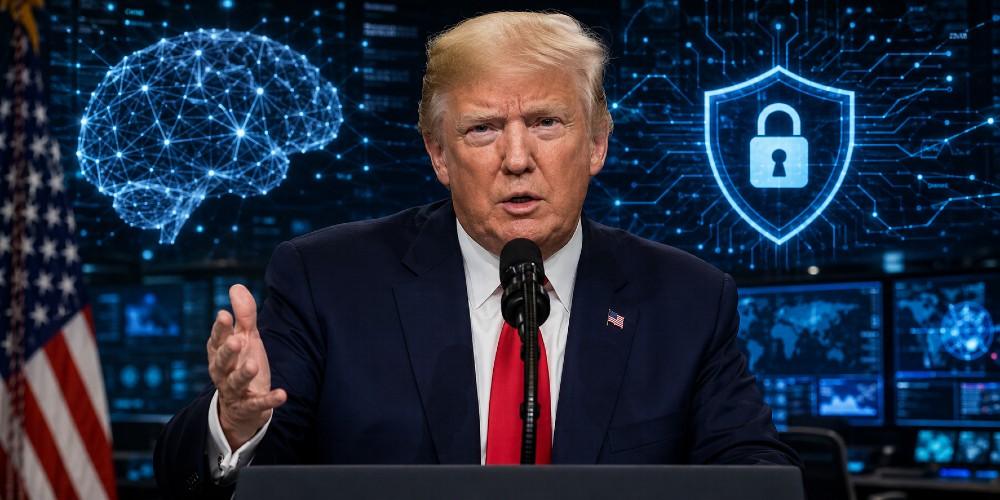
The Trump White House is preparing to issue an executive order addressing the dual challenges of artificial intelligence advancement and national security risks, sources indicate. Set for release as early as this week, the order focuses on bolstering cybersecurity protections while establishing a voluntary framework for government review of the most advanced “frontier” AI models before public deployment.
This move comes amid heightened concerns over models like Anthropic’s Mythos and OpenAI’s latest offerings, which demonstrate unprecedented capabilities in identifying and exploiting software vulnerabilities. Rather than a full regulatory clampdown, the draft emphasizes voluntary cooperation from AI developers, who would share models with the government at least 90 days prior to release and provide access for critical infrastructure providers.
It reflects an administration committed to American technological dominance while refusing to ignore emerging threats that could undermine it.
President Trump’s record on AI has consistently prioritized unleashing American ingenuity over bureaucratic obstruction. From early executive actions removing barriers to innovation and countering “woke” biases in federal systems to efforts centralizing policy at the federal level to avoid a patchwork of state rules, the administration has treated AI as a strategic asset in global competition. Yet the rapid evolution of models capable of autonomous cyber operations demands vigilance.
The Mythos episode, in particular, has forced a recalibration, highlighting how even cutting-edge tools can pose supply chain and security dilemmas when developers impose restrictions on government use.
Critics on the hardline side may view the voluntary nature of the framework as insufficient. Anti-AI sentiment has grown alongside these capabilities, fueled by legitimate fears of unchecked power in the hands of a few tech giants. The convoluted drafting process itself reveals real tensions within the administration—between those who see AI primarily as an economic and military boon and those wary of repeating the regulatory failures that hampered American energy and manufacturing in prior decades.
Media portrayals often frame such internal discussions as chaos or infighting. In reality, they demonstrate prudent deliberation. A president who campaigned on restoring American strength understands that blind acceleration invites disaster, just as overregulation invites decline.
The order’s cybersecurity components—securing Pentagon systems, boosting hiring, and encouraging industry-government collaboration—address vulnerabilities that adversaries like China would eagerly exploit. Beijing’s own state-directed AI push leaves little room for American complacency.
History offers sobering parallels. Nations that mastered industrial revolutions through disciplined innovation outpaced those mired in caution or excess control. America’s edge depends on maintaining that balance: fostering breakthroughs while safeguarding the infrastructure and values that make them possible. This executive order attempts precisely that middle path, rejecting both naive deregulation and the European-style precautionary principle that smothers progress.
The involvement of both national security and civilian agencies in enforcement underscores the breadth of the challenge. AI no longer sits in a Silicon Valley silo; it intersects with defense, infrastructure, and daily economic life. A voluntary 90-day review window provides breathing room for assessment without handing bureaucrats veto power that could drive development overseas.
As the order takes shape, its success will hinge on execution. Will it truly empower defenders more than it burdens creators? The Trump administration’s prior focus on preemption of state overreach and national frameworks suggests an eye toward unity of effort. Yet the real test lies in results: safer systems, continued leadership, and avoidance of the innovation-killing traps that have ensnared other technologies.
In weighing these matters, one is reminded of the ancient call to discernment amid powerful forces. “For God hath not given us the spirit of fear; but of power, and of love, and of a sound mind” (2 Timothy 1:7). Prudent stewardship of AI requires rejecting both fear-driven paralysis and reckless abandon, pursuing instead ordered liberty that glorifies human creativity under divine sovereignty.
Whatever the final text, this effort signals recognition that AI’s promise must be secured against its perils. America’s competitors will not wait. Neither should we.


No comments:
Post a Comment