
1. The haskap berry is an edible blue honeysuckle, native to northern hemisphere countries including Canada, Japan and Russia, with the botanical name Lonicera caerulea.
2. Haskap berries grow on deciduous leafy bushes which have an amazing ability to survive hostile, freezing northern winters.
3. Haskaps are oval-rectangular in shape, often likened to elongated blueberries.
4. Each haskap berry contains two twin purple-blue berries inside, wrapped in an outer purple-blue skin, with deep crimson flesh.
5. The berries are delicious and taste unique. Their flavour profile is described as a distinctive blend of tangy and sweet.
6. Haskaps contain high levels of bioactive compounds especially anthocyanins, and other phytochemicals which are associated with health promoting benefits. Anthocyanins are naturally occurring plant pigments that give fruit and vegetables their deep purple, blue and red colours.
Haskap berries have a unique anthocyanin profile, with one specific anthocyanin called cyanidin-3-glucoside, known as C3G, making up around 85% of the total anthocyanin content.
7. Treasured for centuries in Japan, Russia and China, haskap berries were enjoyed as a wild crop berry and also used in traditional medicine.
8. The haskap was named by the indigenous Ainu people of northern Japan who knew it as the berry of long life and good eyesight.
9. Haskap plants are also known by other names, including honeyberry, blue honeysuckle and sweet berry honeysuckle.
10. Haskapa Superberry Powder is tasty, easy-tp-blend and you need just one teaspoon a day. Use as you would other fruit or berry powders - simply add to smoothies, shakes, stir into breakfast cereal, porridge or yogurt. Haskap Superberry Powder is also brilliant in baking and desserts - adding natural colour and a unique delicious taste and a healthy kick.
Guide to Growing Haskap Berries
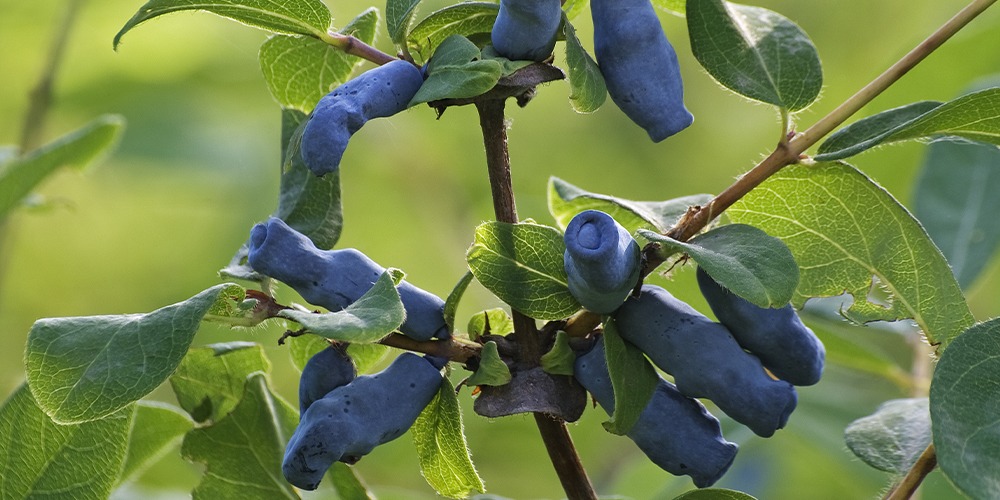
Are you growing haskap berries yet? If you’re not yet familiar with these peculiarly shaped beauties, they may soon become your favourite fruit crop in your garden. Tastier than Saskatoons, tamer than raspberries, and lower-maintenance than blueberries or strawberries, these amazing little berry shrubs are on the verge of becoming staples of the Edmonton garden. Here’s why you should plant some this year—and how to do it!
What the Heck are Haskaps?
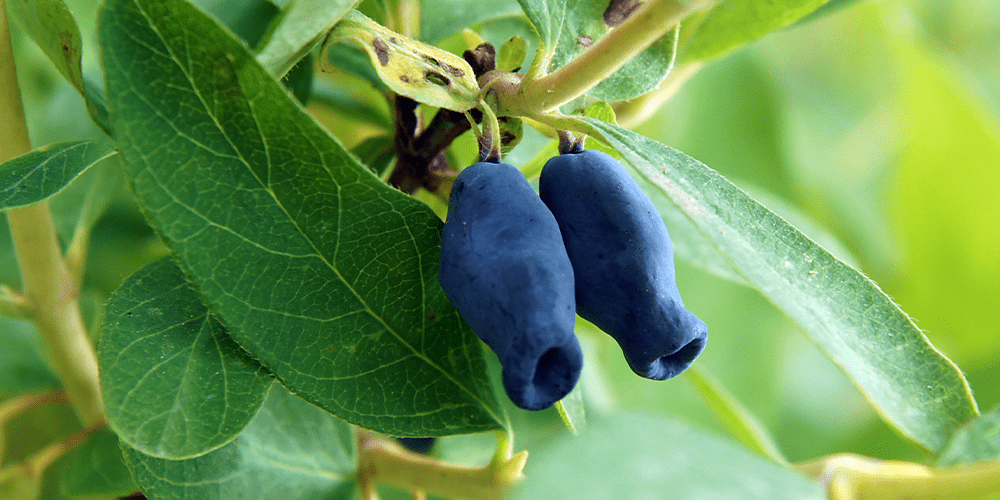
Haskap berries (Lonicera caerulea), also known as honeyberries, are similar in colour to blueberries and similar in shape to kalamata olives, but it isn’t a relative of either. The plants are actually a cultivar of a shrub in the honeysuckle family that grows natively throughout North America, Europe, and Northern Asia. The berries of the wild plants have been popular in Japan for centuries; in fact, the word ‘haskap’ is Japanese for “berry of long life and good vision.”
While the berries have long been celebrated in the East, they weren’t as well-received in Western markets due to their bitter, astringent flavour. Modern-day “honeyberries” were developed from the Japanese parent plant by the Fruit Program at the University of Saskatchewan. Through extensive breeding, the U of S was able to produce an ideal shrub for urban gardens bearing delicious edible fruit. These Canadian-bred cultivars are now the parent plants of the haskap shrubs growing in gardens throughout the world!
Haskap Berries in the Landscape
Unlike Saskatoon berries and raspberry brambles, which tend to have wild spreading habits, haskap shrubs are pleasantly neat garden plants. Rarely exceeding 2 metres in height or width, they grow into tidy, rounded shrubs that fit handsomely in tiny urban gardens. If you’ve longed for a fruit-producing tree or shrub for your townhouse garden, you’ll be happy to hear that two bushes can easily fit in the space a single apple tree would take!
Due to their diminutive size, they are well-suited to mixed perennial borders. Their lovely yellow trumpet-shaped flowers are frequently visited by pollinators—a relief, as the shrubs do require cross-pollination for fruit to set!
Haskap Berries in the Kitchen
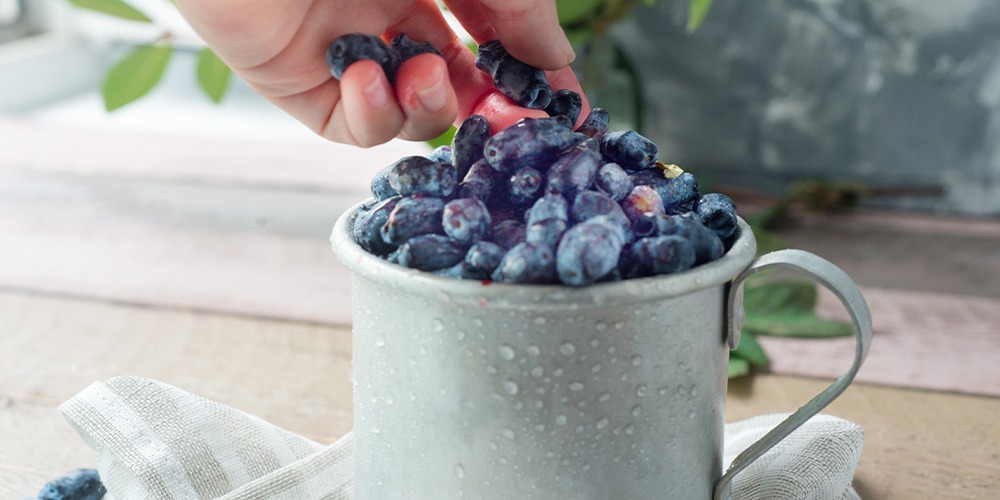
If you were curious about the way they look, you’re surely eager to find out how they taste! After all, a name like ‘honeyberry’ sounds very promising. To the delight of most people who try them, the fruit is often described as a mixture of a blueberry and raspberry. However, it has also been compared to other dark berries such as red grape, black currant, Saskatoon berry or chokecherry. The fruit is quite sweet, fairly tart, slightly astringent, and delightfully juicy. Each berry contains a small edible seed, a nice textural contrast to the fruit’s soft skin and flesh.
Better yet, they’re very good for you! The berries are very high in vitamin C, and like many purple fruits, contain high levels of antioxidants.
You can enjoy your “honeyberries” raw, dried, or press them for juice. They make fabulous jellies and jams, can be used like blueberries in baking recipes, and make great additions to smoothies. They’ve even been incorporated into ice creams and meads!
Growing Haskap Berries in Alberta
These berry bushes thrive in our soil and climate, so growing them is hardly a challenge for the average Alberta gardener. Due to the harsh Northern boreal environments where the wild parent plants grow, contemporary cultivars are highly adaptable to our soil. Simply choose a location with at least 6 hours of sun exposure and prepare a planting hole with ample organic matter. Water newly planted shrubs well and keep them moist until established. Haskap shrubs are hardy to zone 2 and more tolerant of wet conditions than other fruits, so once established, they’re fairly self-sufficient.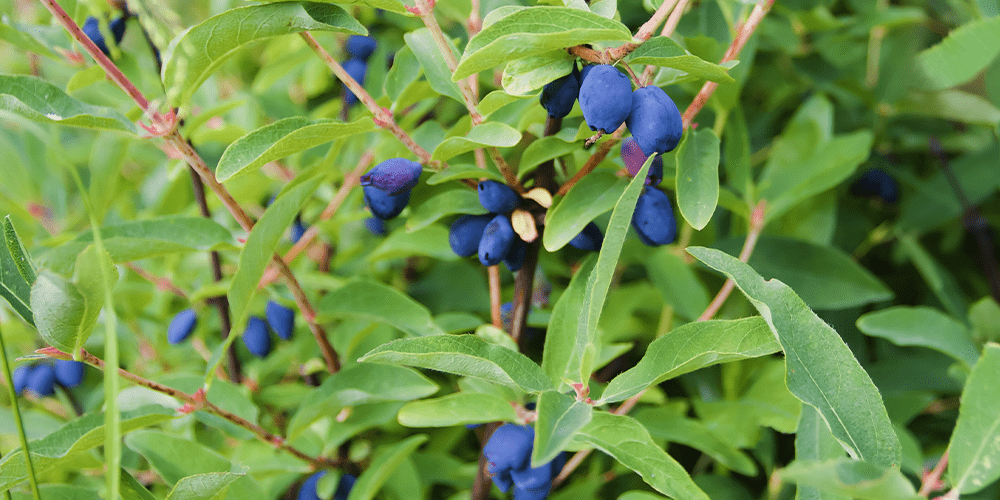
To keep haskaps well-fed, fertilize with an all-purpose, rose, or fruit and berry-specific granular fertilizer monthly in May, June, July, and at the beginning of August. Organic fertilizers are also a great option. Fertilize no later than mid-August, as late feeding will delay the plant’s ability to prepare for winter.
Guide to Growing Haskap Berries | Salisbury Greenhouse
These berry bushes thrive in our soil and climate, so growing them is hardly a challenge for the average Alberta gardener. Due to the harsh Northern boreal environments where the wild parent plants grow, contemporary cultivars are highly adaptable to our soil. Simply choose a location with at least 6 hours of sun exposure and prepare a planting hole with ample organic matter. Water newly planted shrubs well and keep them moist until established. Haskap shrubs are hardy to zone 2 and more tolerant of wet conditions than other fruits, so once established, they’re fairly self-sufficient.
To keep haskaps well-fed, fertilize with an all-purpose, rose, or fruit and berry-specific granular fertilizer monthly in May, June, July, and at the beginning of August. Organic fertilizers are also a great option. Fertilize no later than mid-August, as late feeding will delay the plant’s ability to prepare for winter.
Guide to Growing Haskap Berries | Salisbury Greenhouse




No comments:
Post a Comment