One thing every war, every conflict, every clash of arms brings us is insights into how to fight the next war - or, at least, we should hope they do. There is an old military axiom that complains that we are always training to fight the last war, and to a certain extent that's true, but every war also brings with it opportunities to test new things and to develop new tactics. In in 1991, in Operation Desert Storm, we learned that stealth and precision-guided munitions were great force multipliers. In more recent clashes, like the 2003 invasion of Iraq, we saw the value in high-tech, sophisticated weapons and vehicles, like the M1A2 tank, which is almost invulnerable on the battlefield when facing other tanks.
Now, both the United States and Israel's actions against Iran, as well as the ongoing Russo-Ukrainian war, are showing us something new: The use of low-cost, easily mass-produced weapons that can be deployed in large numbers. Like drone swarms.
NATO is now looking at these developments with some alarm. Why? Because NATO forces aren't well equipped to counter them.
Days after NATO allies committed tens of billions of dollars to new air and missile defenses, the alliance’s top transformation commander warned that the West must fundamentally redesign its weapons and industrial base to withstand attacks at the scale now being demonstrated in Ukraine and the Middle East.
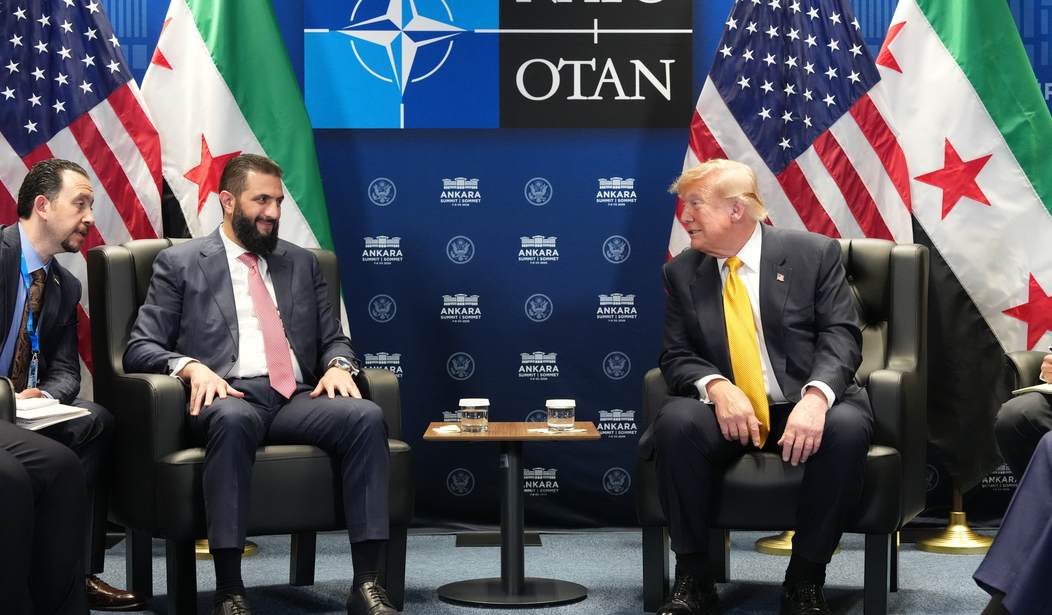
"Today, the math is not in favor of the West," Adm. Pierre Vandier, NATO’s Supreme Allied Commander Transformation (SACT), told Fox News Digital in an exclusive interview following the alliance’s summit in Ankara, Turkey, in early July.
Math is rather brutal. In World War II in Europe, Germany faced a similar problem. In that conflict, the primary offensive weapons on both sides were armor and infantry. German armor was, arguably, superior to British and American armor, but American armor, primarily in the form of the M4 Sherman tank, had the advantage of being cheaper, relying on mass-produced components, and easier to produce in large numbers. The German tanks were sophisticated, but each one had to be built by skilled craftsmen, and while they were daunting while they worked, they didn't work as well.
There's an old saying that applies: In building armor, Germany was producing hand-made masterpieces, while America was doing the 1941-1945 equivalent of 3D-printing tanks.
That's the model that NATO should be looking at now: How to counter something like a drone swarm with another drone swarm.
Russia’s nightly barrages against Ukraine have exposed an air-defense model designed for smaller numbers of incoming threats. The U.S.-Iran conflict has simultaneously intensified demand for the high-end interceptors needed to defeat ballistic missiles, including Patriots and Terminal High Altitude Area Defense (THAAD) that cannot quickly be replaced.
"There is no way to produce 50,000 Patriots a year," Vandier said. "We don’t have the supply chain, and it’s not worth doing that given the cost of the weapon."
Instead, Vandier said NATO needs a layered mix of defenses: cheaper weapons that can be mass-produced to counter waves of drones, while preserving advanced interceptors for ballistic missiles and other sophisticated threats.
So, now, NATO - and the United States - are faced with the necessity, once again, of mass-producing cheaper and yet effective interceptors.
Read More: First NATO Shootdown: Romanian F-16 Downs Rogue Drone
New Era of Affordable Stand-Off Weapons for US Air Force
Drones and the interceptors that deploy against them are now an inextricable part of warfare. They are cheap and easy to produce in large numbers, possibly in large enough numbers to overwhelm any nation's air defenses. And remember, it's logistics, always logistics, that wins wars. Another old military saying applies: When studying war, amateurs discuss tactics, while professionals study logistics. In this battlespace, any nation that can mass-produce drone swarms the fastest and most steadily will have a huge advantage.
That's what NATO is facing, and the Pentagon had better be thinking about this, too.
https://redstate.com/wardclark/2026/07/28/reassessing-defense-nato-must-now-close-the-weapons-divide-n2204860


No comments:
Post a Comment