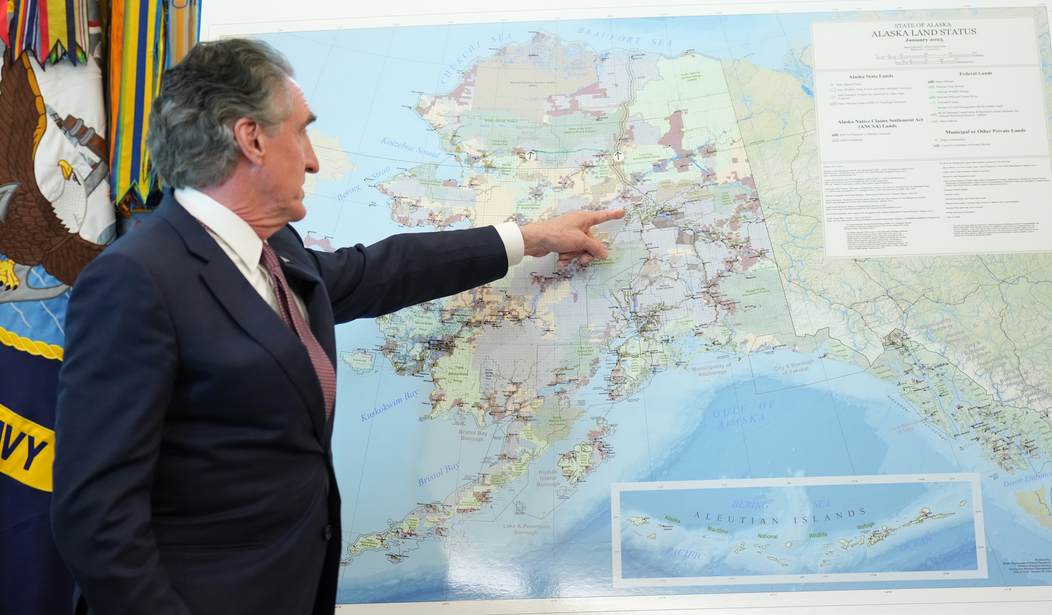
Antimony is a critical material, used in everything from ammunition to night vision equipment. Until recently, over 90 percent of the world's metallic antimony came from China, Russia, and Tajikistan, but that's changing, thanks to the Trump administration's policy of "Mine, baby, mine" and the Great Land's fantastic mineral wealth.
In the latest development, this being a material critical to national security, $43.4 million Defense Production Act (DPA) has been issued to the Nova Mineral Corporation to boost the development of an all-Alaskan supply chain for antimony.
Completion of engineering and design for Nova Minerals Corp.'s antimony pilot plant provides a clearer picture of an emerging all-Alaska supply chain that will deliver a metalloid that is highly critical to national security.
"We continue to make rapid progress on the antimony project and remain ahead of schedule, with another major milestone now completed," said Nova Minerals CEO Christopher Gerteisen.
The urgency is being spurred by China, Russia, and Tajikistan, which currently control more than 90% of the global supply of this critical metalloid used for ammunition, night vision equipment, flame-proofing compounds, and other military and commercial applications.
To help establish a domestic source, the U.S. Department of War awarded Nova's U.S. subsidiary, Alaska Range Resources (ARR), a $43.4 million Defense Production Act (DPA) Title III grant to accelerate the development of an antimony supply chain anchored by the company's Estelle project about 100 miles northwest of Anchorage.
Instead of sending ore to be processed outside, Alaskan ores will be taken through two Alaskan processing sites for crushing, screening, and refining. The Port McKenzie refinery will use a proprietary process to produce military-grade antimony.
The whole thing is expected to grow:
The pilot plant is designed initially to produce antimony trisulfide. Its modular layout would allow Nova to add refining circuits for antimony trioxide and antimony metal as the operation expands.
The company envisions the Port MacKenzie facility eventually serving as a processing hub for feedstock from Estelle and other regional or international projects.
In addition to commercial uses, antimony is required for a range of military technologies and applications, including ammunition, batteries, flame retardants, electronics, flares, explosives, and infrared sensors.
Read More: Alaska Antimony Breakthrough: Felix Reveals New Direct Smelting Path
American Success Story: Ambler Mining District Set for Breakthrough in 2026
Rare earth minerals have been a hot topic, even before President Trump started his second term. Antimony is far from the only material for which we depend on China; rare earth minerals from yttrium to heavy rare earths like dysprosium and light rare earths like lanthanum. A lot of these are also found in Alaska, at places like Bokan Mountain and Graphite Creek. Bokan Mountain, in fact, is one of the largest undeveloped sources of rare earths, both heavy and light, in the United States.
There's tremendous potential for Alaskan mineral development, and we haven't even really scratched the surface yet. And there's a lot more, not the least of which is gold, and when we are mining gold, we are quite literally digging up money.
China is still the world's leading producer of antimony, as well as most rare earth minerals, but right here in the Great Land, we're going to give them some competition.
https://redstate.com/wardclark/2026/07/16/alaska-now-challenging-china-on-critical-antimony-supply-n2204412



No comments:
Post a Comment