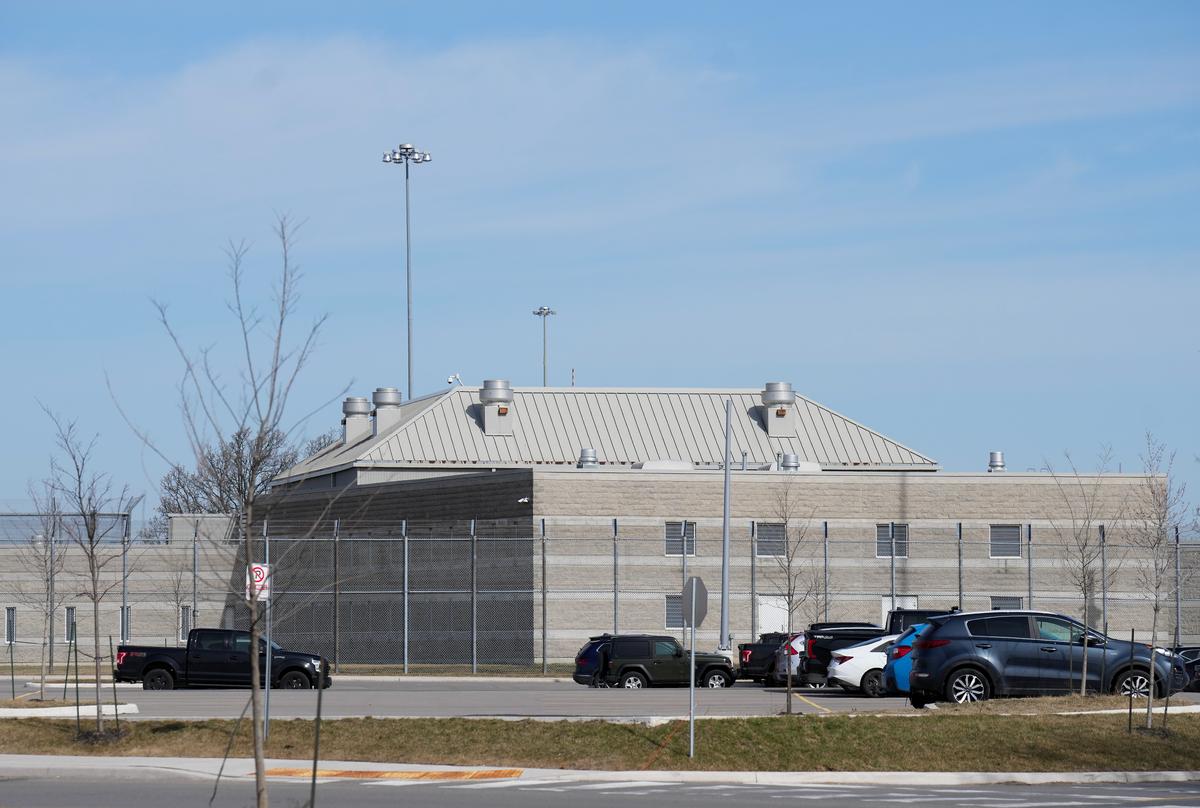
The Maplehurst Correctional Complex is shown in Milton, Ont., on March 8, 2024.
The drug trafficker’s two-year sentence was adjusted due to the “violence” and “overcrowding” at the jail in Milton, Ont., that left him feeling anxious, depressed, and fearful for his safety, Chief Justice Michael Tulloch wrote in the court’s decision.
The conditions at Maplehurst Correctional Complex were “unusually harsh” and had “a particularly acute effect” on Oryia, Tulloch wrote on behalf of the panel. The jail serves as a maximum security detention facility for remanded inmates, as well as a medium to maximum security correctional centre for individuals sentenced to two years or less.
“Continued incarceration would exceed what is necessary to achieve the purposes of sentencing,” the judge said. “The appellant has served 315 days in custody under these conditions. The objectives of denunciation and deterrence have been substantially met.”
Offender’s History
Oryia immigrated to Canada from Afghanistan as a baby in 2001. According to court documents, he faced racial bullying and social exclusion at school and sought the company of “negative peers” in high school to gain social acceptance rather than confronting his ensuing anxiety and depression.Police searched Oryia’s car in late 2020 and discovered 150 grams of cocaine, more than $72,000 in cash, a safe, brass knuckles, and various materials associated with trafficking. He was 19 at the time.
Oryia pleaded guilty to possession of cocaine for the purpose of trafficking and possession of proceeds of crime over $5,000 and remained incident-free for nearly three years under “strict bail conditions” prior to his February 2024 sentencing.
“The sentencing judge found that he expressed genuine remorse, severed ties with negative influences, limited his social circle to family, and had no substance abuse issues,” the ruling said. “The pre-sentence report assessed him as suitable for community supervision, and Crown counsel acknowledged that a conditional sentence would not endanger public safety.”
The defence requested a conditional sentence of two years less a day, which would have allowed Oryia to serve his sentence in the community under strict conditions. The Crown sought a two-year custodial term and the sentencing judge imposed a sentence of two years’ imprisonment, less 32 days of pre-sentence credit.
Jail Conditions
Prior to receiving bail and being placed under strict house arrest while awaiting the result of his appeal, Oryia spent most of his time in custody at Maplehurst. A total of 223 days were spent in a cell intended for two occupants but accommodating three, “necessitating that he sleep on a mattress positioned on the floor next to the toilet,” the judge wrote.“He reports that the mattress was often placed directly on concrete, with limited bedding, and that he was initially provided with bloodstained sheets,” the judge added.
He also underwent numerous institutional lockdowns, which accounted for approximately 40 percent of his time in custody, including 96 prolonged periods of complete lockdown during which he was restricted to his cell for the entire day, Tulloch wrote.
During those times, he had limited access to showers, clean clothing, laundry services, and personal supplies, and was deprived of outdoor yard time or communal spaces, according to the court’s ruling. He also said he was subjected to institutional violence, including witnessing severe assaults and facing physical intimidation and assault from fellow inmates.
Oryia’s lawyer argued during the appeal that “these conditions had a pronounced psychological impact on him,” particularly when coupled with his previous experiences of depression stemming from bullying.
The three-judge panel concluded the lockdowns and sleeping conditions were “mitigating factors” in their own right, irrespective of Oryia’s personal experience. They also agreed he was at risk of experiencing “incarceration more severely than others” because of his documented mental health history.
“Sentences must remain proportionate in their real-world effect,” the judge wrote. “The concrete consequences of this incarceration, including violence, harassment, strict restrictions of residual liberty, and deterioration in mental health, were not anticipated at sentencing and materially alter the proportionality analysis.”
The court commuted Oryia’s original two-year sentence, opting instead to impose a term of time served behind bars along with house arrest for the remaining 382 days of his sentence.
https://www.theepochtimes.com/world/ontario-drug-trafficker-to-complete-sentence-at-home-after-jail-conditions-deemed-unusually-harsh-by-court-6000510?ea_src=frontpage&ea_med=section-1


No comments:
Post a Comment