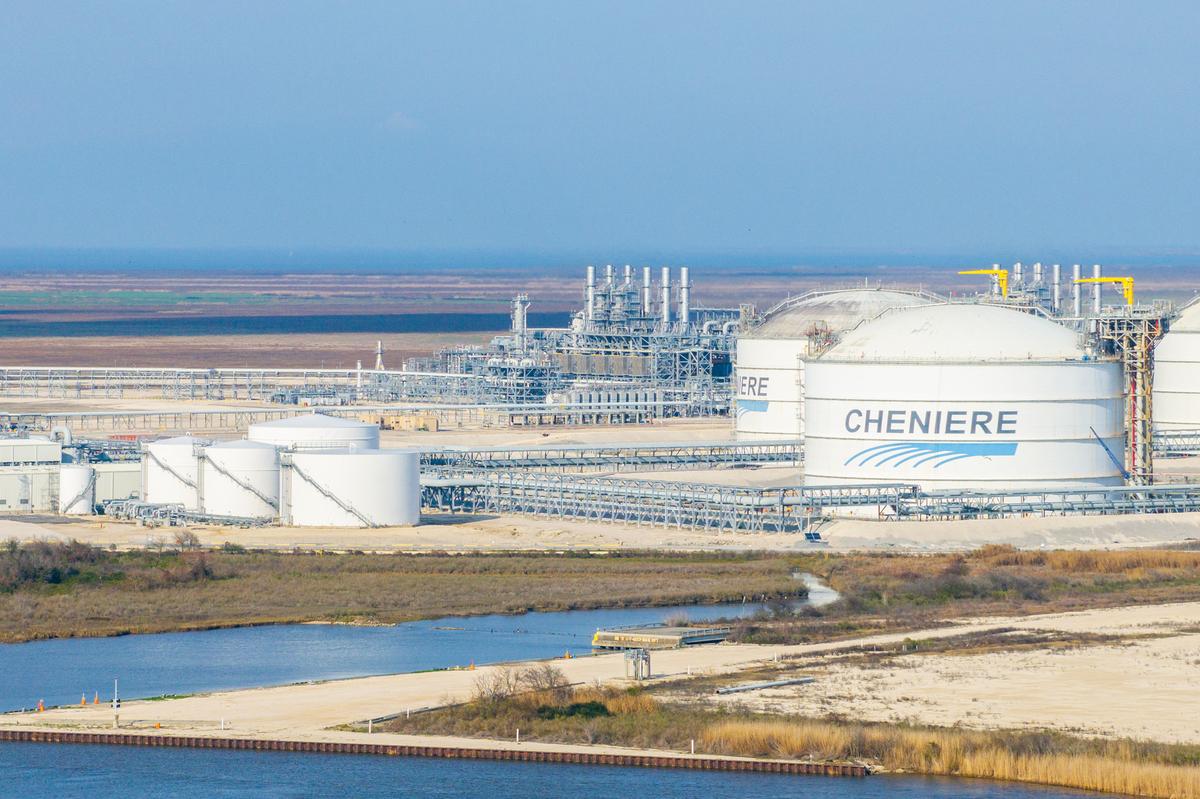
ExxonMobil and QatarEnergy’s jointly owned Golden Pass plant in Texas is liquefying natural gas as of March 30 and expected to begin exporting within weeks.
Before the attack, Qatar exported enough LNG to meet 20 percent of global gas demand.
The joint venture between ExxonMobil and QatarEnergy announced on March 30 that it has begun liquefying natural gas at its plant and terminal on the Texas side of Sabine Pass, and will gradually increase production to provide a new source of desperately needed LNG.
“Today, we began producing LNG at our terminal in Sabine Pass, marking the completion of a significant effort to construct, commission, and start up the first LNG train and the beginning of operating a world-class facility with an exceptional team,” Golden Pass President and CEO Alex Savva said in a March 30 statement.
The United States is the world’s largest LNG exporter, having passed Qatar and Australia in 2022, with domestic producers now supplying 25 percent of global consumption, according to the U.S. Energy Information Administration. Nearly 70 percent is shipped to buyers in Europe, with Japanese and South Korean consumers increasing imports over the past few years.
Qatar was the world’s second-largest LNG exporter, supplying nearly 20 percent of global demand. About 90 percent of Qatari LNG was purchased by buyers in Asia, including China, South Korea, Japan, India, and Pakistan.
A March 18 Iranian missile strike caused massive damage to state-owned QatarEnergy’s Ras Laffan Industrial City Pearl gas-to-liquids plant and destroyed at least two of 14 “trains,” sequential components that purify and cool natural gas to turn it into liquid for transport. QatarEnergy estimates that it will take at least three years, and perhaps five years, to restore that production capacity.
There are eight U.S. LNG export terminals, all on the Gulf of America and East Coast: four in Louisiana, two in Texas, and one each in Georgia and Maryland. All are operating at capacity, meaning that there is little ability to boost production to replace Qatar’s LNG production.
However, Golden Pass could significantly cut into that deficit. The development includes three liquefaction trains that, at full capacity, will produce up to 18.1 million tons of LNG per year extracted from five massive natural gas storage tanks and pumped to pierside berths that can accommodate two LNG carriers at a time.
One large LNG tanker can typically carry enough natural gas to power up to 700,000 homes for an entire year, according to the Center for LNG.
“I’m proud of our team and their tireless work to ensure we safely reached this milestone,” Golden Pass Vice President of Operations Jeremy Horn said. “We’re excited to go to work delivering Texas LNG to power the world.”
https://www.theepochtimes.com/business/9th-us-lng-plant-begins-operations-in-race-to-replace-production-lost-in-iran-war-6005726?ea_src=frontpage&ea_med=section-1


No comments:
Post a Comment