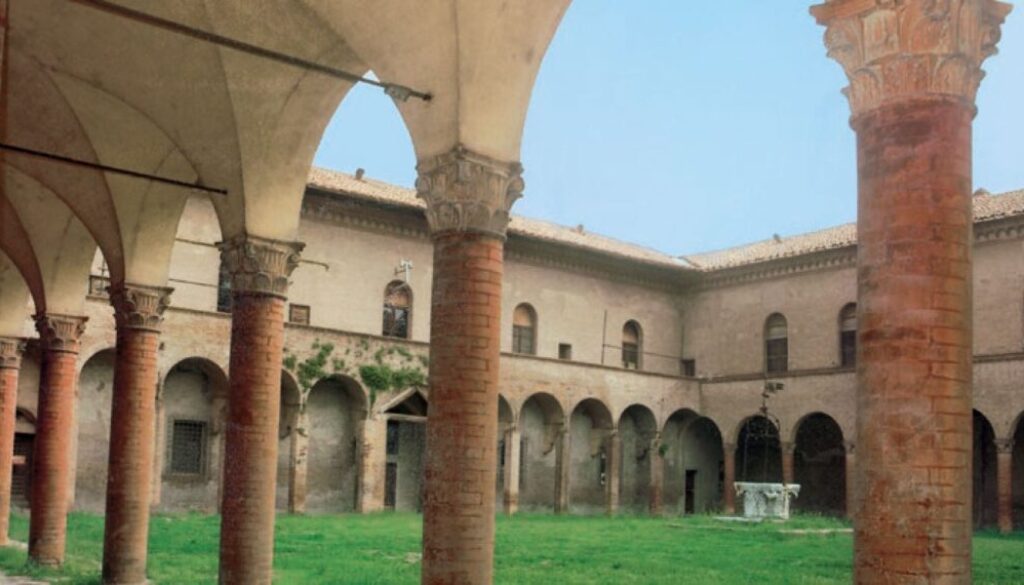
A leading European chemical safety institute has ousted the director of its cancer research center after the director led an extensive testing program into the safety of the pesticide glyphosate, sparking concerns about chemical industry influence into what has been an independent research institution.
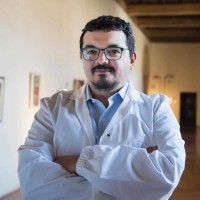
Dr. Daniele Mandrioli joined the Ramazzini Institute in Bologna, Italy in 2012 and has directed the Institute’s Cesare Maltoni Cancer Research Center since 2020. The research facility conducts toxicology studies on a range of environmental substances to determine their carcinogenicity and other potential health implications.
The institute’s work has been used to inform regulatory decision-making and policy work on multiple chemicals, including vinyl chloride, benzene, and formaldehyde, and the group says it collaborates with the US National Toxicology Program as well as the US National Institute of Environmental Health Sciences. It touts “50 YEARS OF INDEPENDENT RESEARCH” on its website and lists the World Health Organization as a partner.
But the dismissal of Mandrioli and the suspicion that it is tied to his work on glyphosate, has roiled scientific circles.
In a Jan. 21 letter to Ramazzini Institute President Loretta Masotti, Dr. Philip Landrigan, a US environmental epidemiologist and pediatrician who leads Boston College’s global public health program and who also is head of the International Scientific Advisory Committee of the Ramazzini Institute, described Mandrioli as a “superb scientist” and complained that the committee had not been consulted on the termination. The decision appeared to be due to industry pressure, the letter alleges.
“Dr. Mandrioli … has been subjected to vicious attacks by the chemical industry because the findings of the Institute’s independent research have cost these companies money and hurt their bottom line,” Landrigan wrote. “The attacks on Dr. Mandrioli have increased in intensity in recent months since publication of the results of the Global Glyphosate Study, which found that glyphosate causes dose-related increases in cancer at multiple anatomic sites in experimental animals, most notably increases in leukemia.”
“We are deeply concerned that your decision may signal an end to the independence of the Ramazzini Institute’s research,” the letter states.
When asked to comment about the concerns, Masotti said that the “relationship with Dr. Mandrioli was terminated by mutual agreement,” and was not due to pressure from the chemical industry. She said the glyphosate studies will continue.
“Our values of independent research have never been questioned. The Ramazzini Institute Cancer Research Center is an internationally recognized center of excellence, renowned for its numerous and exceptional contributions to environmental research, and recognized for its scientific integrity and independence,” Masotti said.
Under Mandrioli’s leadership, the research center has been focused recently on studying multiple potential health impacts from glyphosate, which is the world’s most widely used weed killing chemical. It is commonly known as the chief ingredient in Roundup brands made popular by Monsanto, a company now owned by the German conglomerate Bayer.
Many scientific studies over the years have linked glyphosate and Roundup to cancer, and the World Health Organization’s International Agency for Research on Cancer in 2015 classified the pesticide as probably carcinogenic to humans.
Close to 200,000 people sued Monsanto and Bayer in the US alleging their cancers are due to exposure to the glyphosate-based herbicides.
But Monsanto and subsequently Bayer maintain there is no valid science linking glyphosate to cancer and have furiously fought back against scientists and others who dispute that position, including those with the World Health Organization.
Last summer, Mandrioli and the research center published the results of a two-year study Mandrioli said showed “solid and independent scientific evidence of the carcinogenicity of glyphosate and glyphosate-based herbicides.” The study found, among other things, that co-formulants in glyphosate herbicide products may enhance the carcinogenicity of glyphosate, particularly in the case of leukemia.
The research was part of a “Global Glyphosate Study” involving scientists from Boston College, George Mason University, King’s College London, Icahn School of Medicine at Mount Sinai, Scientific Centre of Monaco, University of Bologna, the Institute of Agricultural Biology and Biotechnology of the Italian National Research Council the Italian National Institute of Health, and the National Food Safety Committee of the Italian Ministry of Health.
In 2022, the group published prior findings showing adverse effects of glyphosate at doses that are currently considered safe.
Bayer responded by accusing the Ramazzini Institute of having “a long history of making misleading claims about the safety of various products.” The company did not respond to a request for comment about Mandrioli’s dismissal.
Mandrioli said in an interview that he has been subject to “an incredible amount of attacks” because of the glyphosate study.
“Unfortunately, my experience is similar to what too many independent scientists are increasingly going through,” he said.
The research center is currently completing four new manuscripts on pesticide testing. It is not clear when those might be published.
Members of Collegium Ramazzini, a scientific academy of physicians and scientists from 45 countries, said in a statement that the process of terminating Mandrioli was “non-transparent” and “secretive”, and offered no rational explanation other than to say it was part of a “reorganization.”
The group said that the 2025 glyphosate study was “the largest international toxicological study ever performed on glyphosate and glyphosate-based herbicides” and that “attacks and defamatory campaigns” against Mandrioli “dramatically escalated” after the 2025 study was released.
The attacks sought to “undermine his credibility and the credibility of his team’s independent research findings on the toxicity of hazardous chemicals,” the group wrote.
Francesco Forastiere, a scientist with the National Research Council in Palermo, Italy and a visiting professor at Imperial College, London, said the dismissal “lacked justification and was abrupt.”
“There was no transparency in the operation,” said Forastiere, who sits on an advisory panel to the Institute. “I am astonished.”
https://www.thenewlede.org/2026/01/outrage-at-ramazinni-glyphosate/


No comments:
Post a Comment