Defense argues conflict of interest exists because prosecutor's relative was present during assassination
PROVO, Utah — Defense attorneys for the Utah electrician accused of assassinating Turning Point USA founder Charlie Kirk want the Utah County Attorney’s Office disqualified from handling the case because a member of the prosecution team had an adult child who was present for the murder.
But legal experts are split on whether the connection constitutes an actual conflict of interest.
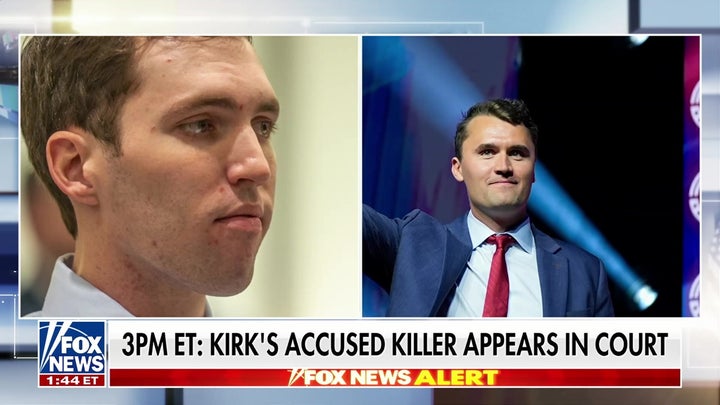
Tyler Robinson appeared in court Friday afternoon as arguments on the motion got underway. Robinson entered the courtroom shortly before the scheduled 1 p.m. MT start time, smiling and nodding toward his parents, who were seated in the front row. Wearing a blue shirt, khaki pants and a tie, Robinson sat behind his attorneys as a bailiff removed his shackles.
The courtroom was not full, despite significant interest in the capital case. Only 30 members of the public were allowed inside, even though 75 seats were available. At least 10 seats sat empty in the back of the courtroom, with several front-row seats reserved for family members.
Robinson was unshackled moments later and appeared calm, scratching his chin as he waited for proceedings to begin. He is present with his full legal team, including defense attorney Staci Visser.
Judge Tony Graf called the court to order and addressed procedural matters, including the release of transcripts from prior proceedings. The judge said the transcripts would be released in redacted form, a move the defense agreed to. Prosecutors were seen conferring among themselves and appeared visibly displeased but did not object.
Graf also reviewed courtroom contempt rules, appearing to direct the remarks toward members of the media. He warned that violations of his orders could result in video transmissions being cut off entirely, with future hearings limited to audio-only coverage. He also cautioned that the pool camera could be removed from the courtroom if rules are violated.
Defense attorneys then began arguing the motion to disqualify the Utah County Attorney’s Office, telling the court they were "very concerned we are getting off on the wrong foot."

Amber Robinson (left) arrives to court today.
Robinson’s attorney, Richard Novak, said the case presents a clear risk of an unresolved conflict of interest and argued that allowing county prosecutors to continue litigating the issue would require them to defend their own propriety.
"This is very clearly the type of case where there very well may be a conflict of interest that has not been handled," Novak told the court.
As an assistant district attorney addressed the court, Robinson leaned toward his lawyers and spoke quietly with them. He took notes with a pencil on a yellow legal pad as the argument continued.
Defense counsel acknowledged it took time to think through the issue and said they believe there should have been a referral to the Utah Attorney General’s Office. They added that it would benefit the court to receive additional filings and suggested the hearing could be continued if the judge was open to considering new legal authorities.
Novak warned it was "problematic" to proceed with an evidentiary hearing where the same office would both prosecute the case and defend its own conduct, urging the judge to strike the county’s response and direct the Attorney General’s Office to assume responsibility.
Prosecutors pushed back, with Utah County Attorney Jeff Gray calling the request an "ambush" and a stalling tactic. Deputy Attorney Ryan McBride added that the defense was assuming a conflict existed before the court had made such a finding.
Graf pressed further, asking why the defense had not filed a motion addressing those concerns in advance.
Novak said the defense took responsibility for the timing, noting the issue had been raised in a reply filing and emphasizing that county attorneys should not be representing themselves in the matter. He reiterated that a motion to disqualify the office had, in fact, been filed.
Robinson appeared to listen closely as the exchange unfolded.

4th District Court Judge Tony Graf reads the charging documents as Tyler Robinson, 22, the suspect in the shooting death of Charlie Kirk, appeared by camera on Tuesday, Sept. 16, 2025, for his initial appearance in Provo, Utah.
The defense also argued that Graf has the authority to direct the Utah Attorney General’s Office to step in or designate a separate entity to litigate the issue. They said they are prepared to proceed with an evidentiary hearing but remain concerned that Utah County attorneys would be effectively representing themselves in the proceedings.
Novak told the court there was no screening process within the county attorney’s office because prosecutors believed none was necessary. He also said the Attorney General’s Office has stated there was no consultation on the matter.
"The court needs to hear from a representative of the state who does not even appear to have a conflict of interest," Novak argued, asking the judge to direct the Attorney General’s Office to assume responsibility for responding to the motion.
Graf then questioned the defense about the legal authority supporting their request, asking what precedent he should consider. Following a brief adjournment for a short recess, defense attorney Kathy Nester was observed chatting with Robinson’s parents as Robinson sat quietly at the counsel table.

When court resumed, Graf said the issue before him was significant and required careful consideration, emphasizing he did not want to make a "snap decision" without fully reviewing the arguments and weighing the constitutional rights of all parties.
Graf said he was accepting the facts alleged in the defense motion as true, including that a prosecutor’s adult child was present at the Turning Point USA event, heard gunfire, fled with the crowd, and texted the prosecutor during the chaos. Graf also noted the prosecutor later went to Utah Valley University to determine how close the family member had been to the shooting, estimating the distance at about 85 feet.
Graf then questioned whether witness testimony was necessary to decide the initial threshold question or whether the court could rely on affidavits and the existing record.
Novak argued testimony was needed to explore emotional impact, family and office communications, screening decisions, and whether the experience influenced prosecutorial decision-making. Prosecutors countered that the defense must first make a sufficient showing of a conflict before removing the county attorney’s office from handling the motion.
Graf said he understood both positions and indicated he would continue reviewing whether the defense met the required threshold before deciding how the court should proceed.
After reviewing the arguments and filings, Graf said the defense had not met the threshold showing a potential conflict of interest based on the briefs before the court, signaling that the written submissions alone were insufficient to justify removing county prosecutors from litigating the issue at this stage. As Novak returned to the podium, Robinson looked down at his notes, writing briefly before quietly reviewing them with Nester.
McBride told the court the case has "polarized the nation," citing reported death threats against witnesses and threats directed at prosecutors and members of the county attorney’s office, and warning that doxing has become a real concern.

People run after shots were fired during an appearance by Charlie Kirk at Utah Valley University on September 10, 2025 in Orem, Utah. Kirk, founder of Turning Point USA, was speaking at his "American Comeback Tour" when he was shot in the neck and killed.
While Graf weighed whether the defense had made a sufficient showing to justify removing county prosecutors from litigating the motion, outside legal experts questioned whether the connection rises to the level of a true conflict of interest.
"This is one of those motions I find ridiculous," said Donna Rotunno, a Chicago criminal defense attorney and Fox News contributor. "Normally I like to see a vigorous defense and attorneys doing everything they can to protect their client, but this is one that I find frivolous in nature."
It would be a conflict if the relative’s presence had some way of influencing the case, she told Fox News Digital. "If the family member was the victim, then maybe this is an issue," Rotunno said. "If Erika Kirk was related to a prosecutor, they would have more ground to stand on."
Typically, a prosecutor can be recused or disqualified from a case if there is a conflict of interest that would jeopardize the defendant’s right to a fair trial. With such a high-profile shooting at a public event in a small town, the connection may not be so unusual.
"The legal system takes conflicts of interest seriously, but a prosecutor isn’t automatically disqualified just because someone in their family witnessed a traumatic event connected to the case," said Randolph Rice, a Baltimore-based attorney and legal analyst. "The key issue is whether that relationship creates a real risk that decisions are being driven by emotion instead of evidence."
Courts usually require "a clear, direct conflict that threatens the defendant’s right to a fair trial" before disqualifying an entire prosecutor’s office from a case, he said.
"At the same time, prosecutors also have a duty to avoid even the appearance of impropriety, especially in a high-profile capital case where public trust is already on edge," he said.
The capital case is as high-stakes as it can get for a defense team, and if Robinson’s lawyers are successful, new prosecutors on the case may have different views about the death penalty, he said.

Charlie Kirk speaks before he is assassinated during Turning Point's visit to Utah Valley University in Orem, Utah, on Sept. 10, 2025.
"I have had cases in the past where we had to bring in a different prosecutor because we were prosecuting an individual who was tangentially related to an employee in the office," he said. "Also had situations where we had to bring in different judges from different jurisdictions who were unfamiliar with a lawyer's family member who was being prosecuted."
However, there’s also the chance that federal prosecutors add new charges to make sure the potential death penalty remains on the table.
"Getting this prosecutor or prosecutor's office kicked off the case opens the possibility of a different state agency coming in and evaluating this case differently and possibly not seeking the death penalty — which would be a huge win for Tyler Robinson's team and for him," he said.
The state countered that the prosecutor in question does not have a personal conflict of interest — and that even if he did, it would not extend to the entire office. Utah County Attorney Jeff Gray, who campaigned for office on a platform of seeking the death penalty where appropriate and justified, also argued that the deputy prosecutor’s connection to a witness played no role in his decision to file a notice of intent to seek capital punishment against Robinson.
Thousands of other people saw the murder, according to court filings, and prosecutors don’t need to rely on the relative, who they added had no personal knowledge of "the actual murder." The adult child had no direct line of sight to the rooftop sniper’s perch, only to where Kirk was sitting, according to a prosecution filing.

Defense attorney Richard Novak, top, speaks with Utah County Attorney’s Office general counsel Christopher Ballard, right, during a hearing for Tyler Robinson, accused of murdering Charlie Kirk, in Fourth District Court in Provo, Utah, on Dec. 11, 2025.
During the chaos, however, the witness was texting with family, including the prosecutor.
"CHARLIE GOT SHOT," read one harrowing message.


No comments:
Post a Comment