
The Trump administration is tightening the net around Venezuela’s oil exports, saying that the country stole American property and that its governing regime is illegitimate.
What is the basis for these claims of stolen property and what is at stake in this escalating conflict?
In 2007, the Venezuelan government under then-leader Hugo Chávez seized the country’s last remaining foreign-controlled crude oil assets, situated in the country’s Orinoco Belt. The territory contains the world’s largest crude oil reserves.
American oil majors including Exxon Mobil, ConocoPhillips and Chevron, together with the United Kingdom’s BP, France’s Total, and Norway’s Statoil all had investments under existing contracts with the Venezuelan government to develop the site.
Venezuela under Chávez “blew those contracts up,” Phil Flynn, senior market analyst at The Price Futures Group, told The Epoch Times.
Seizing Oil Assets
Venezuela nationalized its oil reserves in 1976, taking control of American oil assets.“A lot of people ask, ‘What’s the difference between Venezuela and Saudi Arabia and the Middle Eastern countries that all did the same thing?’” Flynn said. “Those countries actually paid compensation.”
The United States took no action against those countries at the time, taking the position that nations had the right to control their own natural resources. In return, however, the countries generally compensated or agreed to compensate oil companies to some degree for the value of their shares, investments, and contracts.
The oil companies that were impacted by Venezuela’s asset seizure filed compensation claims in U.S. and international courts, seeking approximately $60 billion in damages in total. Courts have upheld these claims.

Most recently, in January, the World Bank’s International Centre for the Settlement of Investment Disputes supported a 2022 decision by a U.S. federal court that Venezuela must pay $8.5 billion to ConocoPhillips.
“Venezuela has a documented history of seizing U.S.-owned oil assets, including equipment, facilities, and contractual interests, and then refusing to pay the compensation ordered by international courts,” Jason Isaac, CEO of the American Energy Institute, told The Epoch Times. “President Trump is correct that Venezuela stole assets belonging to U.S. oil companies.”
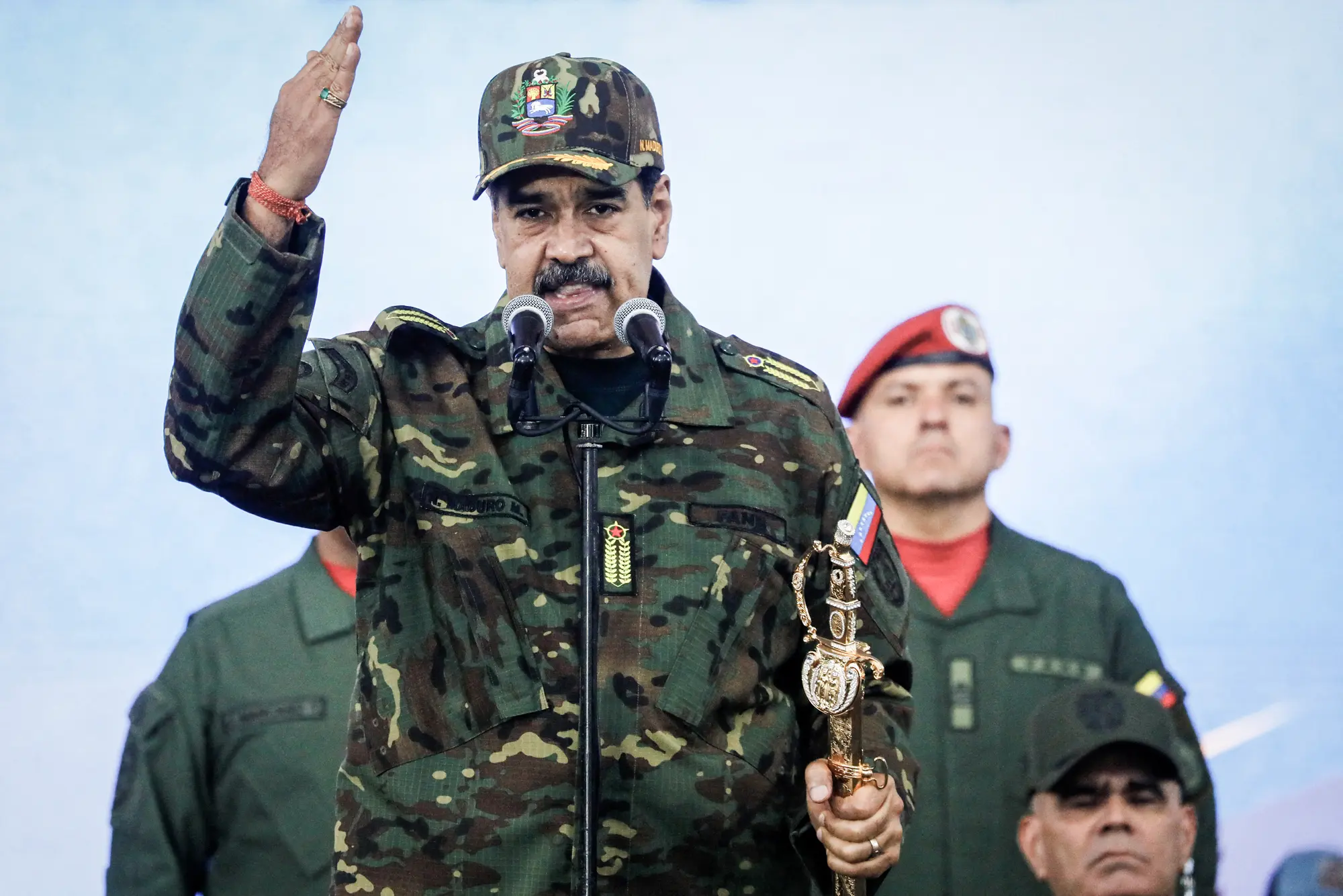
Venezuelan regime leader Nicolás Maduro has responded that the United States is trying to remove him from power in order to take control of the country’s oil supplies, which were nationalized nearly two decades ago, raising allegations of American colonialism in Latin America.
But Maduro’s claim to legitimacy as Venezuela’s president is also being challenged. In 2024, it was widely reported that Venezuelans voted overwhelmingly in favor of Maduro’s opponent, Edmundo González, to be their next president.
Maduro claimed victory regardless and was able to hold on to the presidency due to support from state security forces.
Largest Oil Reserves

“With supply constraints from Mexico and increased competition for Canadian barrels, alternative feedstocks are in sharper focus,” the report said. More access to Venezuelan oil “would restore, in part, the refining diet U.S. plants were built for in decades prior to sanctions on Venezuela.”
Flynn said the U.S. refining system was largely “built to refine Venezuelan heavy oil.”
Russia is another major supplier of heavy oil, a particularly viscous and dense grade, but those supplies are also under sanction following Russia’s invasion of Ukraine.
“With those supplies tightened by sanctions, it would be a huge win, not only for the United States, but for the global economy, if we saw stability back in Venezuela,” Flynn said.
Restoring access to Venezuelan exports could allow Gulf Coast refineries to return to the production levels they were built to handle. At its peak in the 1990s, Venezuela was the United States’ largest foreign supplier, providing about one-fifth of America’s oil imports.
“There are a lot of people that are skeptical that if Maduro left, that it would take years to bring back the Venezuelan oil industry, but I don’t believe it.” Flynn said. “I think that the demand for heavy oil could bring that industry back immediately.”

A Country Wrecked by Socialism
Once the wealthiest country in South America and one of the 20th richest countries in the world, Venezuela fell into poverty after electing socialist Hugo Chávez as its president in 1998. A 2024 report by the Council on Foreign Relations states that Venezuela has since become “the archetype of a failed petrostate.”The oil industry that generated the country’s wealth has been “starved of adequate investment and maintenance,” and has been declining for decades, the report states.
Despite that decline, what remains of its oil industry still generates approximately two-thirds of the government’s revenue, indicating its utter dependence on oil exports. Venezuela’s gross domestic product (GDP) shrank by roughly three-quarters between 2014 and 2021, rebounding slightly in 2023 as the Biden administration loosened existing sanctions on the country’s oil exports.

While the blockade announcement was immediately followed by a modest spike in global oil prices, analysts say the overall impact from the embargo on energy markets will likely be marginal.
“Most Venezuelan oil has been going to China through sanction-evading intermediaries using shadow tankers, ship-to-ship transfers, and relabeling schemes,” Isaac said.
“These are discounted barrels sold outside transparent markets to keep the Maduro regime solvent,” he said. “Disrupting that trade mainly impacts buyers who have been ignoring U.S. sanctions, not the global oil market.”
https://www.theepochtimes.com/article/why-trump-is-taking-the-fight-to-venezuelas-doorstep-5961978?ea_src=frontpage&ea_med=section-1


No comments:
Post a Comment