Senate Democrats have a shared goal of taking back the majority this fall. Boy, do they disagree about how to do it.
Party leaders have been picking winners and clearing the field since the late Harry Reid was leader, but those days are clearly at an end as Democratic senators splinter in a host of competitive primaries — at times at odds with the Minority Leader Chuck Schumer and the Democratic Senatorial Campaign Committee.
The new dynamic takes the fight about the future of the party — from ideology to electability to age — directly to voters, and it gives rank-and-file senators influence to shape primary results. The new Wild West isn’t lost on its members.
“It’s because we haven’t had the spicy primaries,” Sen. Brian Schatz, D-Hawaii, told Semafor. “Spicy primaries are interesting, and it shows that voters are being given a choice.”
The jockeying around those primaries has become so intense that Schatz said he’s “not even tracking who’s for who. I would need a Google Doc.” The candidates themselves are paying close attention, wielding endorsements from sitting senators to boost name recognition and raise money.
It’s all part of a huge split over whether to follow the traditional mold, where electability calculations are about a candidate’s appeal to independent voters, or to support insurgent candidates, who some Democratic senators think can animate disaffected Americans. The battle is accelerating, with signs that endorsements may matter in contested primaries — Illinois Lt. Gov. Juliana Stratton rode several progressive backers to a win over a
better-funded rival.
Just this week, Centrist Sens. Maggie Hassan of New Hampshire and Catherine Cortez Masto of Nevada backed state Rep. Josh Turek, the more moderate Senate candidate in Iowa. Those were the first two caucus endorsements in the state, but Sen. Elizabeth Warren, D-Mass., promptly backed Turek’s more progressive opponent, state Sen. Zach Wahls.
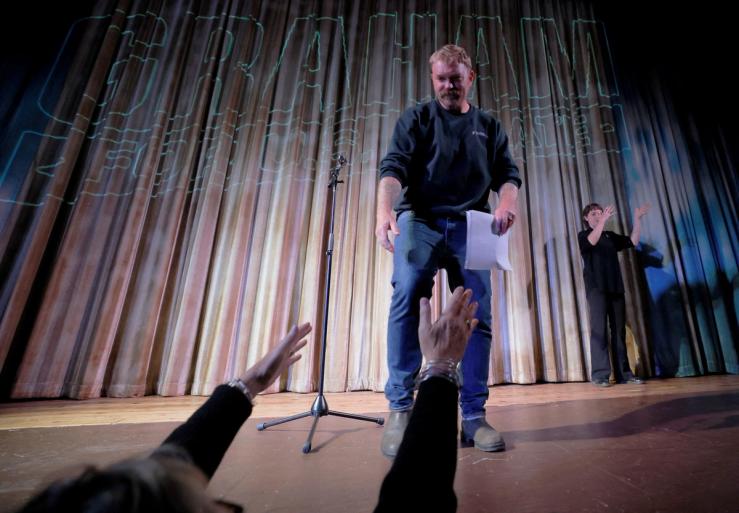
Warren also backed insurgent Graham Platner in Maine over sitting Democratic Gov. Janet Mills and state Sen. Mallory McMorrow in Michigan, who wants new party leadership.
Then on Friday, Cortez Masto endorsed Rep. Haley Stevens in Michigan, who is seen by some Democrats as the most electable candidate in a general election. That puts the Nevada Democrat on the opposite side of Warren in four primary races — and makes for three different candidates in Michigan earning backing from senators in the Democratic Caucus. Sen. Bernie Sanders, I-Vt., is supporting progressive Abdul El-Sayed in Michigan.
The sprawling battle for the Senate is even animating low-key Democrats, like Wisconsin’s Tammy Baldwin, who see this as a critical moment to support candidates who can win general elections in red and purple states. Baldwin has endorsed the more centrist Rep. Angie Craig, D-Minn., over progressive Lt. Gov. Peggy Flanagan.
“Our strong focus also is getting the majority back,” Baldwin said in an interview. “And so I think, as individual members of our caucus, we’re getting behind the people that we think can win.”
Schumer landed key recruits who cleared the field in Ohio, North Carolina, and Alaska, but the primaries in Iowa, Minnesota, Michigan and Maine are wide open. The New Yorker himself vocally backs Mills in Maine, and party leaders subtly prefer Turek in Iowa and Stevens in Michigan.
That hasn’t led to groundswells in support among Schumer’s troops — and in some races, his preferred candidates are trailing in the limited public polling.
Progressive Sen. Chris Murphy, D-Conn., endorsed McMorrow and Flanagan and is weighing whether to wade into Maine and Iowa. He told Semafor the candidates themselves are “very aggressively pursuing Senate endorsements. So sometimes you’re responding to candidates that are asking once, twice and three times.”
“Many of them have some pretty clear ideological separation between the candidates. There aren’t many personality primaries. So they end up being natural primaries for caucus members to stand in,” Murphy said. “I think we need senators that are going to be as pugilistic as possible.”
There aren’t always perfect throughlines for where senators end up: Sen. Ruben Gallego is backing Platner in Maine, aligning with progressives, but supporting Craig in Minnesota over the liberal-backed Flanagan. Sen. Martin Heinrich, D-N.M., is backing Platner, Flanagan and McMorrow but he also endorsed state Rep. James Talarico in Texas over the more confrontational Rep. Jasmine Crockett.
Heinrich said the recent primary wins of Talarico and Stratton reflect voters’ desire for candidates “who are not the status quo or the sort of formula that you may have used in the past to figure out who’s electable.”
Minnesota is the most active battleground among Senate Democrats. Flanagan has amassed eight Senate endorsers, mostly from the party’s progressive wing, and Craig has five, several of whom served with her in the House.
Craig casts her primary as a referendum on electability and experience. She told Semafor that “Democratic primary voters right now know that we are at such a perilous moment in time that we can’t have a candidate who needs training wheels.”
“The lieutenant governor was going around saying it doesn’t matter who wins the primary before Michele Tafoya got in, because it was the normal crew of pathetic Republicans on the other side,” Craig said. “You can’t say that at this point. Michele Tafoya is well-known and well-liked by the independent voter. And we just can’t take Minnesota for granted.”
Alexandra Fetissoff, a spokesperson for Flanagan, dinged Craig for voting for the Laken Riley Act, a vote Craig says she now regrets. And Fetissoff brought up Flanagan’s endorsement from retiring Sen. Tina Smith, D-Minn.
Democrats “want to elect candidates who share their values. Angie Craig is not that candidate,” Fetissoff said. “It’s why Senator Tina Smith has endorsed Peggy Flanagan to succeed her in the Senate.”
Democratic senators predicted the contests in Iowa, Michigan and Maine will attract more interest, and soon. In Iowa, Warren praised Wahls as someone who will “take on the political establishment to fight for what’s right” — a far different tone than Hassan’s endorsement of Turek.
“He’s been a terrific public servant in Iowa in a district that is red,” Hassan told Semafor. “All I know is I think he’s the best candidate.”
Republicans have their own primary problems in Georgia and Texas, where incumbent Sen. John Cornyn, R-Texas, is facing state Attorney General Ken Paxton.
“While Republicans are locked in nasty, expensive primaries and plagued by infighting and a toxic agenda, Senate Democrats expanded the map by recruiting strong candidates with proven records of winning tough races and created a path to take the majority in November,” said Maeve Coyle, a spokesperson for the DSCC.
Republicans love the internecine fighting but are content for now to let it play out without too much interference.
“It’s not a surprise that Elizabeth Warren would join Bernie Sanders” in backing Platner, said Sen. Susan Collins, R-Maine. “I will leave that up to the Democrats.”
By the strict definition of the word, the Democratic Caucus is in disarray in key primary states. It’s a totally new dynamic, and I’ve never seen so many different ideas among rank-and-file senators about who can win.
It’s also a test of whether endorsements really matter — I do think Stratton benefitted from senators’ involvement, like Warren — in a party with no real national leader that’s relegated to minorities in Congress.
The big split on candidates is only a bad thing for the party if they nominate candidates who can’t win in November.