Thursday, December 4, 2025

Reporting from Burma: As Battle Looms, Free Burma Rangers Prepares Combat Medics

A person in military gear rappels down a rocky slope beside a flowing river, demonstrating climbing skills in a natural environment.

Rangers practice rappelling. Photo by Antonio Graceffo.

A small wooden sign reading “Jungle School of Medicine Kawthoolei” hangs on a bamboo frame beside a vegetable garden, with a row of bamboo buildings behind it that serve as a hospital and classrooms.

Kawthoolei is the Karen people’s term for their homeland, a region of eastern Burma (Myanmar) where Karen resistance forces have operated for decades. The Karen National Union (KNU) began its armed struggle shortly after independence, formally launching its war against the Burmese government in 1949.

For many years it was a lonely fight, with isolated ethnic groups resisting successive military juntas. But since the 2021 coup, war has spread across the entire country and intensified dramatically in the ethnic areas.

The Jungle School of Medicine Kawthoolei (JSMK) is part of the Free Burma Rangers (FBR), which trains medics to work in front-line areas, under fire, where no other aid exists. One anxious female student in the advanced course described why she came to JSMK. “I was in the car with a civilian wounded by a Burma Army attack,” she said. “There was blood everywhere, but I didn’t know what to do.” She paused, reliving the trauma. “So I decided to come here and get training so I can return to my village and help people.”

But during her training, the advanced medic student received word that her village was under attack and residents were fleeing. By the time she completes the course, the Burma Army may have occupied the ground where her home once stood, and her parents and relatives may have joined the 3.5 million people already internally displaced in Burma, about seventy-percent of whom have been uprooted since the 2021 coup that overthrew the democratically elected National League for Democracy government.

All the trainees have similar stories about why they came for training. At this point, nearly everyone in the ethnic states has been displaced, has seen friends or relatives killed or wounded, or all of the above, and they want to help protect their land and their people against the Burma Army.

JSMK is located beside the Free Burma Rangers (FBR) training camp, where more than 200 basic and advanced Rangers are learning about 40 skills, including land navigation, medical care, security, reporting, the Good Life Club children’s program, video, and photography. The group’s mission, according to founder David Eubank, a former U.S. Special Forces officer and Ranger-qualified soldier, is to bring medical help and relief to front-line areas where no other organizations are willing to go.

They treat the wounded, care for displaced civilians, document abuses and war crimes committed by the Burma junta, and train Ranger teams that operate across the country saving lives and, as Eubank put it, “showing God’s love.”

FBR is not a typical missionary organization. They believe that by risking their lives alongside the people they serve, they best live out Jesus’ teaching: “That ye love one another; as I have loved you, that ye also love one another.” Neither the handful of foreign instructors nor the nearly 1,000 Ranger teams comprised of countless ethnic minority groups, working throughout Burma receive a salary. Their slogan reflects that commitment: “Do this for love.”

Group of young individuals gathered around a campfire in a forested area, engaging in conversation and sharing stories while wearing casual outdoor attire.
Rangers warming up beside the fire after a swimming test. The air temperature is only about 50°F (11°C). Most did not know how to swim before beginning the program. Photo by Antonio Graceffo.

Eubank said that to be a ranger, one must understand safety and how to survive ambushes. The emphasis, however, is on leadership, servanthood, humility, and love. “The three rules are simple,” he said. “Do this for love, be literate, and don’t run if the people you’re helping can’t run.” Although the organization is driven by Christian principals, Rangers come from many backgrounds, including Christians, Buddhists, agnostics, and animists.

Earlier this week, the students took part in a field training exercise (FTX). Throughout the night, artillery simulators and blank rounds echoed through the jungle, creating the stress of combat as the trainees navigated in darkness from station to station, treating classmates acting as the wounded. At one station they had to stop a sucking chest wound; at another they applied a tourniquet.

Soldiers seated at long tables enjoy a communal meal in an outdoor dining area surrounded by nature.
Rangers at chow time. Photo by Antonio Graceffo.

Tourniquets are among the most important tools they carry, because a soldier shot on the front line can bleed out in minutes, long before reaching a casualty collection point where advanced medical personnel can intervene.

Field exercises often run through the night, and sometimes for two full days with no sleep and no food, forcing students to push through exhaustion, discomfort, and hunger, realities they will likely face on the battlefield. This particular exercise ended around 1:30 a.m. The next morning, at 5:30, the students turned out for physical training (PT).

They generally have one formal PT session each morning, consisting of running, push-ups, pull-ups, planks, man-carries, and similar exercises. In the late afternoon they usually have a second PT session, carrying firewood or sacks of food and medicine through the jungle for up to an hour and a half.

Group of individuals engaged in physical training outdoors, carrying teammates and participating in team-building exercises in a forested area.
New rangers during PT, practicing relay-race man-carries. Photo by Antonio Graceffo.


Before dinner, they bathe in the river, which becomes uncomfortable in December when mountain temperatures can drop to 51°F (11°C). After dinner, they return to class for more training. The full basic course lasts about three months. Advanced students return for another session, and a select few are chosen for the one-year medical program at JSMK.Top of Form

The rainy season has just ended in Burma, and the junta generally launches major offensives once the roads dry. Reports now indicate a buildup of government troops in reinforced positions on the mountaintop, and they are expected to push forward soon to retake the town below.

Working with Karen resistance forces, FBR sent a reconnaissance team to map the area, locate enemy positions, assess troop strength and weapons, and determine likely avenues of attack. They also had to identify safe locations for casualty collection points (CCPs). These points must be reachable by the aid-and-litter teams who carry the wounded from the front line on hammocks suspended from bamboo poles, yet not easily visible from the air.

The CCP must be concealed and, whenever possible, placed under overhead cover because the Burma Army routinely scouts for and deliberately bombs casualty collection points. At the Battle of Pasaung back in August, I sat inside the CCP while Burma Army aircraft circled overhead all day, dropping exploratory ordnance in an effort to kill the medics and doctors.

Military personnel conduct medical training in a forested area, assisting injured comrades during a tactical exercise.
Rangers practice battlefield first-responder skills. Photo by Antonio Graceffo.

The recon team called back to camp with a status report when Eubank warned them that the trail they were on had an exposed section where the rocks opened up, a spot where Burma Army troops had hit people in previous battles. The team acknowledged the warning and continued, later reporting that they were safe. But soon after, word came in that a civilian had already been shot. The recon team immediately abandoned their survey, pushed through the jungle to reach him, stabilized the wounded man, and sent him on to a referral hospital several hours’ drive away.

Back at the camp, meetings were held to determine how much medicine and equipment to send, and how many people to deploy. A general consensus was reached that, unless there was absolutely no alternative, they would not pull students out of training to send them to the battle. “This is the only time they will get solid training like this,” Eubank said. Sadly, the war has been going on for decades and shows no sign of ending, meaning the students will have ample opportunity to use their skills in combat, but may have only one chance to attend this training.

Consequently, experienced rangers and some instructors, as well as chaplains were selected to go to the battle.

Soldiers in military uniforms bow their heads in prayer during a solemn gathering, reflecting discipline and camaraderie in a training environment.
New Rangers praying during a devotion service. Photo by Antonio Graceffo.

Trainees are required to attend daily devotions, although many are not Christian. “But those are just good words for them to hear,” Eubank explained. There is also a chaplain-training program. Ross, the head chaplain, said, “Our goals for training are first, heart-focused. What is the way of a follower of Jesus? What are the practices of a follower of Jesus? And then from that foundation, how can we perform chaplain skills and complete different responsibilities in the context of a relief mission?”

All chaplains are trained as Ranger first responders, so they can move with the aid and litter teams to the front, in the thick of the fighting. Ross said their training prepares them to “provide casualty care for trauma personnel, stop the bleed, get them off the hot spot, and get them back.” For the upcoming battle, he added, “We have one headquarters chaplain there already, and we’re going to send another two ethnic chaplains.” Ethnic chaplains are crucial because they speak the languages of Rangers who come from many different ethnic groups.

“So maybe they’re providing some limited physical relief medically,” Ross said, “but then they’re praying for people. Maybe as they’re moving people, they’re encouraging them with the truth of scripture. And then as you walk back from the front line, the activities can expand.”

Expectations for the upcoming battle are grim. The Burma Army holds the top of a hill in fortified positions,  a much larger foe with modern weapons, total air superiority, and seemingly unlimited ammunition. By contrast, the resistance forces are volunteers armed with a ramshackle collection of small arms, struggling to find supplies; bullets now cost more than three dollars each and are increasingly hard to find.

Free Burma Rangers is not a militia and does not fight in battles. They provide humanitarian assistance to resistance soldiers and civilians, and they maintain strict rules requiring them to give life-saving care even to captured Burma Army troops. More than once this past year, I have seen or been aware of rangers giving their own blood in transfusions to save the very soldiers who burned their villages and displaced their families. “Forgive and don’t hate each other” is part of the ranger creed, a Christian principle that is perhaps the hardest to accept, but the one that will matter most when it comes time to build a new, free, and democratic Burma once the fighting stops.

After reviewing the map sent back by the reconnaissance team, Eubank was concerned. He ran his finger around the engagement area and said, “This is all a beating zone,” meaning it was being pounded by constant drone and artillery fire. The route aid teams must use to evacuate the wounded runs through the middle, an area with no overhead cover, leaving them fully exposed to enemy fire.

Eubank received a call from one of the many churches and individuals around the world who help support and encourage FBR. After he explained the situation, the supporter, a pastor, told a story from the Old Testament about how a small, righteous force defeated a much larger evil army because an army of angels descended to help them.

He read 2 Chronicles 20:22 (KJV): “And when they began to sing and to praise, the Lord set ambushments against the children of Ammon, Moab, and mount Seir, which were come against Judah; and they were smitten.” Eubank said “Amen,” thanked him, and laughed. “I hope it happens just like that.”

Man working on a laptop at a rustic outdoor table in a village setting, surrounded by trees and traditional buildings.
Antonio Graceffo reporting from Burma.
https://www.thegatewaypundit.com/2025/12/reporting-burma-as-battle-looms-free-burma-rangers/

Senate Republicans Demand Death Penalty for Cop Killers: ‘Back the Blue’

More than two dozen Republican senators are lining up behind a major new effort from Sen. John Cornyn (R-TX) to deliver tougher penalties for violent criminals who target law enforcement officers.

Cornyn introduced the “Back the Blue Act” on Thursday.

The legislation is designed to dramatically increase punishment for murdering or attempting to murder police officers while expanding self-defense protections for the men and women who keep American communities safe.

The bill already has 31 Republican co-sponsors.

Cornyn: Attacks on Law Enforcement “Will Not Be Tolerated”

In a statement, Cornyn said:

“Our law enforcement officers bravely risk their lives daily to protect our communities, and anyone who targets them should be met with the full force of the law, including the death penalty.

“America was built on the principles of law and order, and this legislation sends a clear message that targeted attacks on law enforcement will not be tolerated, dangerous criminals will be held accountable, and our men and women in blue have our full and unwavering support.”

What the Bill Does

Under the proposal, killing or attempting to kill a law enforcement officer, federal judge, or other federally funded public safety officer would become a new federal crime.

Key provisions include:

   • The death penalty eligibility for anyone who murders a law enforcement officer

   • Mandatory 30-year minimum sentence if an officer is killed

   • Treating attempted murder or murder of an officer as an aggravating factor when determining death penalty decisions

   • Increased penalties for assaulting federal law enforcement

   • Additional penalties for criminals who flee across state lines to evade prosecution

   • Time limits on how long federal courts can wait before reviewing a state-level conviction involving the murder of an officer

Cornyn’s office says the bill would also strengthen officer safety by allowing law enforcement to carry firearms in certain federal facilities and other restricted locations.

Strong Backing from Law Enforcement Nationwide

Major police and public-safety organizations are lining up behind the proposal, including:

   • Fraternal Order of Police

   • National Association of Police Organizations

 • Federal Law Enforcement Officers Association

   • Major County Sheriffs of America

   • National Narcotic Officers’ Associations’ Coalition

   • Association of State Criminal Investigative Agencies

   • Sergeants Benevolent Association of the NYPD

Their support underscores the widespread concern among law enforcement that violent attacks on officers have escalated and that Congress must act.

Political Context: Cornyn Faces a Tough Primary

Cornyn is introducing the bill as he faces a competitive GOP primary challenge from Texas Attorney General Ken Paxton and Rep. Wesley Hunt (R-TX).

The legislation underscores Cornyn’s effort to reaffirm his law-and-order credentials at a moment when Republican voters are demanding stronger protections for police and harsher consequences for violent offenders.

https://slaynews.com/news/senate-republicans-demand-death-penalty-cop-killers-back-blue/

Rep. Ilhan Omar’s Links to Massive $1 Billion Somali Fraud Scheme Revealed

Rep. Ilhan Omar (D-MN) has glaring ties to the $1 billion Somali food fraud scam in Minnesota, a report has revealed.

As The Gateway Pundit reported, 70 members of the Somali community in Minnesota were involved in stealing $250 million in COVID funds that were intended to feed children. Millions of dollars were stolen from American taxpayers and sent overseas to Somalia, and 80% of the money has not been recovered.

Seven defendants were tried in connection with the scheme on charges related to stealing more than $40 million in taxpayer funds, and five were found guilty. However, the FBI is still investigating an attempt by a Somali woman to bribe one of the jurors with $120,000 in cash.

However, the fraud extends deeper, with multiple schemes of this nature occurring over the last five years.

On Monday, employees from the Minnesota Department of Human Services accused far-left Governor Tim Walz of orchestrating a sweeping cover-up to shield the massive fraud ring from detection.

Walz not only ignored early warnings but also actively retaliated against agency employees who sounded the alarm, according to employees.

Now, Omar finds herself in the crosshairs of the scandal. The New York Post published alarming evidence that shows she not only threw parties for one of the restaurants involved in the scheme, but she also personally knew one of its convicted owners.

Moreover, she INTRODUCED legislation that led to a quarter of a billion in fraud.

From the New York Post:

US Rep. Ilhan Omar’s close ties to the $1 billion welfare scam in her Minnesota congressional district are being uncovered.

Omar (D-Minn.) held parties at one of the key restaurants named in the fraud, knew one of its now-convicted owners, and one of her own staffers has also been convicted — both for stealing millions.

Omar even introduced the bill that led to $250 million in fraud. Yet she claims to have been completely unaware of it.

“[Rep. Omar] knew who these people were. People she personally knew were making tens of millions of dollars in this program,” claimed Bill Glahn, a policy fellow with the Minnesota-based Center of the American Experiment, to The Post.

The owner in question is 33-year-old Salim Ahmed Said, the owner of Safari Restaurant. This is where Omar held her 2018 campaign victory party.

In March 2025, Said was convicted on 21 criminal counts, including wire fraud, federal programs bribery, and money laundering. He made $5 million from the scheme.

Additionally, Omar had a campaign official, Guhaad Hashi Said, involved in the scam. He pleaded guilty in August to running a fraudulent fake food site called Advance Youth Athletic Development.

Hashi Said ultimately stole $3.2 million from the program.

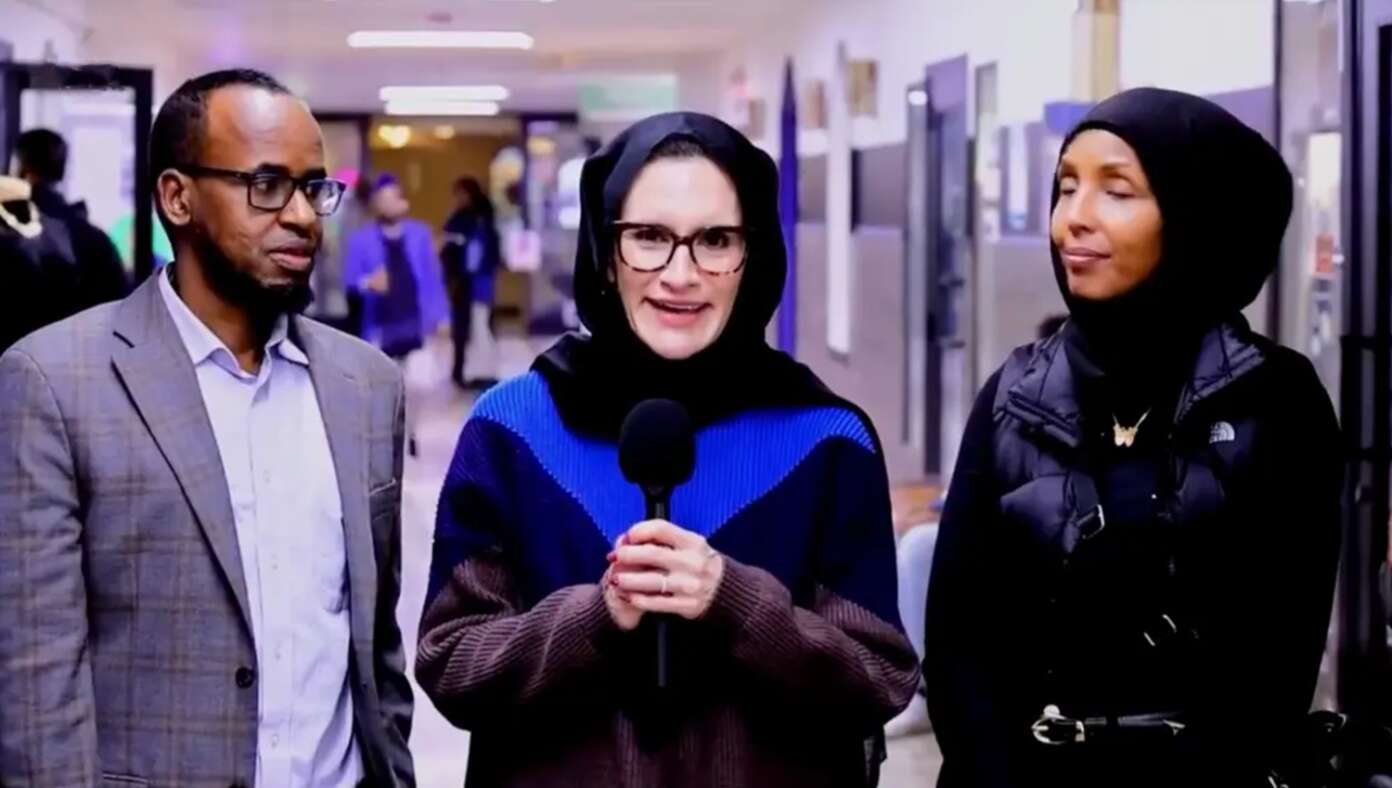
Here is a photo of Omar and Hashi Said together.

Smiling individuals at a family reunion lunch, showcasing a warm atmosphere and cultural attire in Minneapolis, Minnesota.
Credit: Caaqil Guhaad Hasi Facebook

What did Omar know and when did she know it?

https://www.thegatewaypundit.com/2025/12/rep-ilhan-omars-links-massive-1-billion-somali/

Reporting from Burma: As Battle Looms, Free Burma Rangers Prepares Combat Medics

Rangers practice rappelling. Photo by Antonio Graceffo. A small wooden sign reading “ Jungle School of Medicine  Kawthoolei” hangs on a bamb...